
Cash Management in Mexico: Real Solutions for your Business
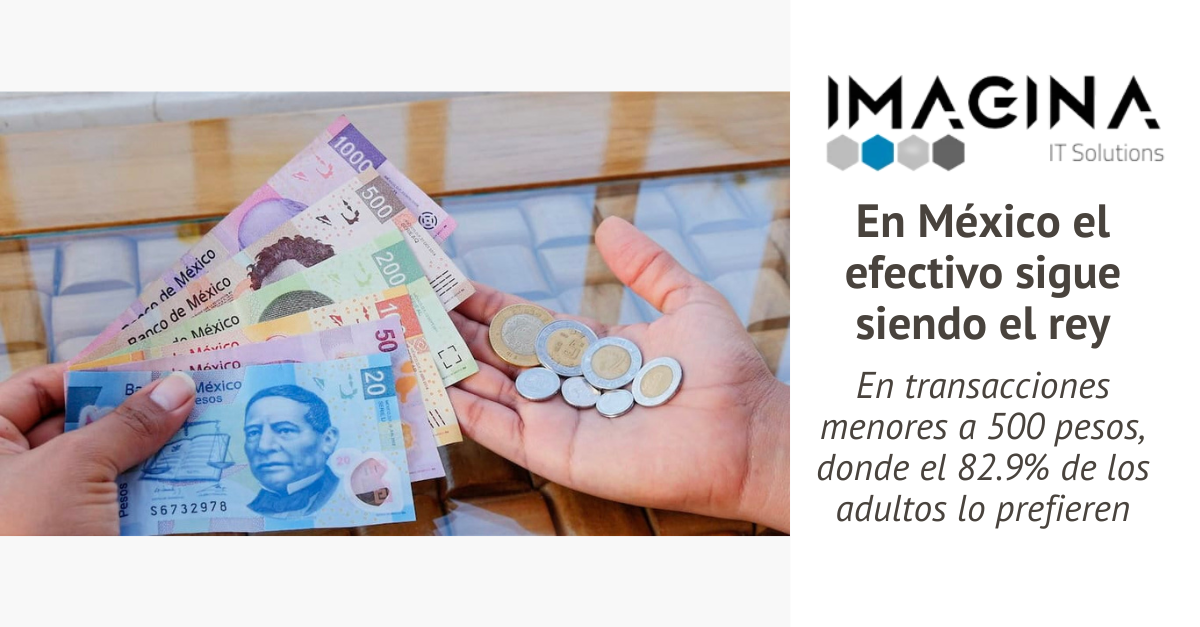
Retail in Mexico is changing, but one thing remains constant: 8 out of every 10 transactions are still in cash. From Mexico City to Monterrey, businesses face the daily challenge of managing large quantities of bills and coins safely and efficiently.
In this article we are going to talk about real situations, challenges and challenges in the Mexican environment, but also about the possible solutions that are already being implemented. Finally, we will give you a step-by-step guide so that you too can join in cash management in your trade or business.
Cash Control in Retail Mexico: The Daily Challenge
To understand the magnitude of the problem, let's think about Ana, owner of a chain of convenience stores in Mexico City. Like thousands of merchants, every day you face challenges that go beyond serving customers and maintaining inventory.
1. Time is Money, Literally
- Each point of sale spends 3 hours a day counting cash
- Supervisors spend 1 additional hour verifying counts
- Managers spend 2 more hours balancing differences
- In total: 6 hours a day of qualified staff counting money instead of driving sales
2. Shortages that Disappear Profits
- “Minor” mismatches of 200-500 pesos per day per box
- Errors in the change delivered to customers
- Counterfeit bills not detected in time
- Monthly losses that can exceed 15,000 pesos per branch
3. The Hidden Cost: Team Morale
- Cashiers stressed by possible shortages on their shift
- Accusations between shifts for imbalances
- Supervisors spending more time investigating shortages than training
- Staff turnover increased by constant pressure
4. The Headache of Audits
- Inconsistent or illegible manual records
- Inability to trace the origin of differences
- Unbudgeted overtime to rebuild records
- Risk of fines for inadequate documentation
5. Impact on Cash Flow
- Delays in bank deposits due to counting time
- Excess cash in store due to lack of control
- Greater risk of theft due to accumulation of cash
- Additional costs of securities services for extra visits
This reality affects businesses of all sizes, from individual stores to large chains. According to data from the retail sector in Mexico, these problems can represent up to 5% loss on total sales, without counting the opportunity cost of lost time.
The good news is that these challenges have a solution. Automation and proper cash control not only eliminate these problems, but can completely transform the operation of the business.
LATAM Payment Automation: Mexico at the forefront
Continuing with the story of Ana and thousands of merchants like her, the cash landscape in Mexico is evolving in a unique way. The numbers are clear: while the use of cash fell from 87% to 82% between 2021 and 2022, it remains the preferred payment method in retail, especially in transactions of less than 500 pesos.
By 2025, experts agree that cash will maintain its dominance in the retail sector.
Why Cash Is Still King?
The answer lies in the very structure of our economy. With 54.3% of workers operating informally, cash is not just a preference, but a market necessity. These businesses depend exclusively on cash transactions, which allow them to operate immediately and without additional commissions.
The Security Paradox in Mexico
We are faced with a peculiar situation: While 43.5% of Mexicans avoid carrying cash for security reasons, businesses are obliged to accept and handle it. This paradox presents a unique challenge: how can merchants safely handle large volumes of cash without sacrificing sales or efficiency?
The most successful businesses are adopting a hybrid approach that reflects this reality. Instead of resisting change or clinging to the past, they are implementing systems that allow them to:
- Maintain universal acceptance of payment methods
- Automate cash handling
- Digitize all your transaction records
- Minimize operational risks
The impact of this transformation is significant and measurable. Businesses that have automated their processes report a 65% reduction in incidents of shortages. Bank reconciliation, which once consumed valuable hours, is now done in minutes. But perhaps the most important thing is the change in work dynamics: staff now dedicate most of their time to what really matters: customer service.
The Necessary Transformation
For Ana, as for many merchants, the question is no longer if you should automate, but when and how to do it. Current technology offers comprehensive solutions ranging from automatic counting and verification of banknotes to real-time reporting, all integrated with existing accounting systems.
Businesses that have taken the step towards automation are better prepared for the future, without neglecting the current needs of the Mexican market. The key is finding the right balance between operational efficiency and the reality of retail commerce in Mexico.
Comprehensive Solutions for Cash Management
Faced with these challenges, several companies have developed solutions to optimize cash management in Mexico. Some of the most notable are:
Anker: Offers cash management devices designed to minimize errors and improve security at retail and horeca points of sale.
Glory: Leader in cash automation technology, with solutions for banks and businesses seeking to optimize their collection and deposit processes.
Prosegur: Specialist in security and cash logistics, providing advanced solutions for large commercial chains.
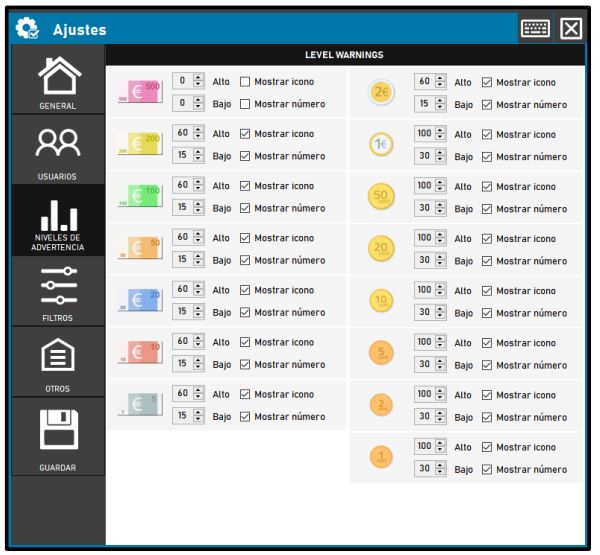
ImaCash: Automate your Processes Intelligently
Within this panorama, ImaCash has become a key ally for businesses seeking a fluid integration between their POS and cash control machines.
🔹 Frictionless integration: ImaCash allows you to connect any point of sale software with cash management devices, without the need for expensive developments.
🔹 Reduction of fraud and errors: Each transaction is recorded in real time, minimizing discrepancies and guaranteeing greater security.
🔹 Time savings in reconciliations: With ImaCash, cash closings are reduced to minutes, allowing staff to focus on customer service and not on balancing figures.
Businesses in Mexico have already managed to reduce cash closing time by up to 80% with the implementation of ImaCash, optimizing their operation and increasing profitability. And the best? Completely integrated with Mexican pesos!
Step by Step Guide to Implement a Cash Management System in a Mexican Business
Follow these steps for effective implementation:
Step 1: Evaluation of the Current State
Before implementing a cash control system, it is essential to analyze the business situation.
- Identify how much time is spent daily on cash management.
- Evaluate how many errors or discrepancies occur in cash closings.
- Determine the main risk areas, such as internal fraud or money losses.
- Analyze current infrastructure: Are there adequate POS and cash control systems in place?
Step 2: Define Objectives and Requirements
With a clear diagnosis, the next step is to establish measurable objectives for process optimization.
- Reduce cash reconciliation time by a certain percentage.
- Eliminate losses due to errors in cash handling.
- Increase security in each transaction through an automated system.
- Improve cash traceability with detailed reports in real time.
Step 3: Select and Implement the Appropriate Solution
It is key to choose technological tools that adapt to the needs of the business.
- Implement cash management software that allows integration with cash control and POS machines.
- Ensure that the chosen solution can scale with business growth.
- Train staff in the use of new technology to ensure a smooth transition.
Step 4: Measurement and Adjustment
Once the solution is implemented, it is important to track the results.
- Compare reconciliation times before and after implementation.
- Verify the reduction of errors in financial reports.
- Collect feedback from staff and make adjustments to processes if necessary.
Step 5: Continuous Expansion and Optimization
Once the solution has proven effective in one area of the business, it can be expanded to other branches or integrated with more functionalities.
- Evaluate new automation tools to further optimize cash flow.
- Explore technologies such as automatic reconciliation and intelligent reporting to make better financial decisions.
- Maintain constant monitoring to ensure the safety and efficiency of the system.
Cash management in Mexico is not a problem of the future, it is an urgent need of the present. While the market continues to evolve with digital options, the reality is that cash continues to drive the economy. Ignoring its correct administration means assuming unnecessary losses, operational risks and an unnecessary workload for the team.
It is not about choosing between cash or digital, but about integrating technology that simplifies processes and guarantees safer operations.
The tools are available. The question is: will your business continue with the same problems or take the step towards smarter and more efficient cash management?
Sources consulted:
Bank of Mexico (Banxico)
National Banking and Securities Commission (CNBV)
Official Gazette of the Federation (DOF)
National Institute of Statistics and Geography (INEGI)
National Urban Public Safety Survey (ENSU)
Statista
Banco de México (Mobile Money – DiMo)
World Bank