
Have you ever seen the frustration on a customer's face when the cash machine gets stuck right in the middle of a transaction? Or worse yet, have you had to deal with long lines because your money management team decided to take an unscheduled break?
In the daily hustle and bustle of banks, casinos and stores, where cash flows like water, these situations are more than just setbacks: they are true operational nightmares that cost time and money.
But it doesn't have to be that way. After years of seeing firsthand how simple maintenance can make the difference between a productive day and one full of headaches, I can tell you that the key is to anticipate.
At Imagina ITS, we don't just talk about software and hardware. We understand that behind every machine there are people: employees who want to do their jobs without complications and customers who expect fast and efficient service.
Want to know how you can keep your computers purring like satisfied kittens instead of roaring like hungry lions? Keep reading. We'll tell you how a little preventative care can save you a lot of headaches (and a few euros) in the long run.
Let's get to it!
The value of preventive versus corrective maintenance
Preventive maintenance is like that annual inspection you do on your car. Yes, it costs time and some money, but we know it's much cheaper than having to tow the car (or in our case, replacing an entire machine).
Think about this: a simple jam of bills can paralyze a cash register for hours. The culprit? It could be something as silly as a buildup of dust that no one bothered to clean. Or how about those sensors that suddenly decide that all bills are fake. With regular maintenance, you could have prevented your customers from leaving for the competition while you struggled with the machine.
I'll tell you a real case: a couple of years ago, we were doing an implementation for a supermarket chain that was on the verge of a cashier riot. Their machines jammed every now and then, and the employees were already fed up. We suggest a weekly preventive maintenance plan – nothing fancy, just a basic clean and some checks; the supermarket started it. The result? In three months, traffic jams were reduced by 70%. The cashiers were happier, the customers stopped complaining, and the manager could sleep peacefully at night.
And I'm not the only one who says it. Large manufacturers, such as VNE, Glory or GeWeTe, have proven time and again that a good preventive maintenance program can reduce service calls by up to 30%. That translates directly to cost savings and fewer headaches for everyone.
Look, I know it's tempting to think if it ain't broke, don't fix it. But in the world of cash management, that mindset can cost you. A little regular attention not only prevents problems, but also extends the life of your equipment. It's like eating well and exercising, but for your machines.
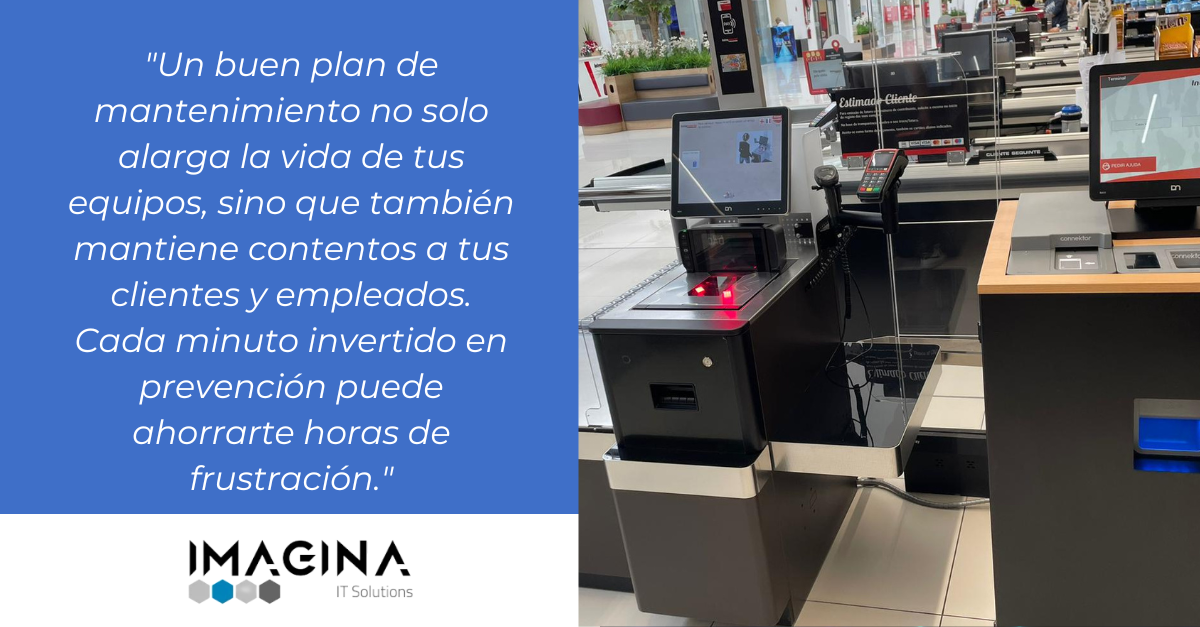
So the next time you think about skipping that scheduled maintenance, remember: every minute you invest in prevention can save you hours of frustration down the road. Don't you think that your employees, your clients and your pocketbook deserve that peace of mind?
Key maintenance techniques to extend the life of machines
Now that we have understood why preventive maintenance is crucial, let's get to what really matters: how to do it? Don't worry, you don't need to be an engineering genius. With these simple techniques, you will keep your machines running like the first day.
Regular and detailed cleaning: The secret is in the toothbrush
Do you remember when your mother told you to brush your teeth every day? Well, your cash machines need the same love. Bill validation sensors, transport rollers and cash dispensers are like the teeth of your equipment: if you don't clean them regularly, grime builds up and problems begin.
My advice: Use compressed air for difficult corners (as you would with dental floss) and specific anti-static cloths for delicate surfaces. How often? In high-use environments, a weekly cleaning can do wonders. In quieter places, perhaps once a month is enough. Trust me, a few minutes of cleaning can save you hours of headaches.
Software and firmware updates: Don't stay in the digital stone age
We have reached my comfort zone: The Software
Imagine using a smartphone with the operating system from five years ago. Frustrating, right? The same thing happens with your cash machines. Software updates aren't just about adding nice features; They are vital to the safety and efficiency of your equipment.
For example, a simple update can dramatically improve new bill recognition or facilitate integration with your point-of-sale system. I have seen cases where an update reduced false ticket rejections by 40%.
My recommendation: Set a monthly calendar to review and apply updates. Better yet, set up automatic updates whenever possible. And here's a golden tip: before any major update, make a backup of your machine's current configuration. This way, if something goes wrong (which rarely happens, but hey, better be safe), you can quickly return to the previous state without losing a single minute of operation. Remember, in the world of cash management, time literally is money.
Sensor inspection and calibration: Tuning your machine's hearing
Sensors are like the ears and eyes of your machine. If they are out of tune, your team could be rejecting good bills or, worse yet, accepting fake ones. Signs that something is wrong? If your machine suddenly starts rejecting bills that you know are authentic, it's time for a check.
Good calibration can be the difference between a smooth day of operations and a line of frustrated customers. Don't wait for the problem to become apparent; A quarterly sensor check can keep you one step ahead.
Go to your calendar now and set a reminder every three months!
Checking the mechanical components: Greasing the gears
This is where things get a little more hands-on. The rollers, motors and feeding mechanisms are the mechanical heart of your machine. A worn roller can cause more frequent paper jams than rush hour jams.
I'll share with you a real case: on a day of work in an integration at a casino, we noticed that it had daily jams in its counting machines. We took advantage of the moment and helped carry out an inspection, we discovered that the rollers were so worn that they looked like smooth wheels. A simple replacement reduced jams by 90%. Moral: don't wait for your mechanical components to scream for help.
As a general rule, the distributor or manufacturer of your cash control machines should recommend the frequency with which you should replace the components, and if they have not done so, demand that information and put a reminder in your calendar.
Use of original parts and consumables: Don't skimp on quality
I know it's tempting to save a few bucks by using generic parts, but believe me, it's like putting water in the gas tank of your car. Original parts and consumables are designed specifically for your machine. Using generics is risking unexpected failures and even voiding the warranty.
I remember the case of a customer who used uncertified ink in his counting machine. Result: a damaged sensor and a repair bill that made the original ink look cheap.
And remember, a little preventative love goes a long way in the world of cash management, although this does not mean that you will stop calling the manufacturer for preventive maintenance, it will only help you reduce incidents.
Recommended maintenance frequency depending on the environment: Not all heroes wear capes, nor do all machines require the same care
Suppose you have two cars: one that you use to do Formula 1 races and another to go buy bread on Sundays. Will you give them the same maintenance? Of course not. The same goes for our beloved cash handling machines.
In the frenetic world of casinos and supermarkets, where money flows like water, your machines need almost daily care. We're talking about a quick cleaning at the end of each day, a deeper check weekly, and a complete monthly checkup.
On the other hand, in the quiet corner pharmacy, where the machine sees less action, you could space things out more. A good weekly cleaning, monthly review and a complete check-up every quarter could be enough.
Here are two examples of what a maintenance plan could look like:


Remember, these are just examples. The key is to watch your machines and adjust as necessary. After all, no one knows your business better than you.
How to implement an effective maintenance plan in collaboration with manufacturers: You are not alone in this
Now, I know what you're thinking: Great, but how am I supposed to do all this by myself? Don't worry, that's what the manufacturers are for. Working hand in hand with them is like having a personal trainer for your machines.
Preventive maintenance contracts are like insurance for your peace of mind. Having experts who check your machines periodically, a technical support team you can call when things get bad, and spare parts that arrive faster than a pizza delivery, is not a luxury, it is a necessity.

For example, leading manufacturers like GeWeTe offer maintenance plans that fit you like a glove. I've seen cases where their technicians detected and fixed problems before the customer even realized something was wrong. Now that's first-class prevention.
Final considerations: The investment in maintenance is an investment in longevity
At the end of the day, taking care of your cash handling machines is taking care of your business. A good maintenance plan not only extends the life of your equipment, but also keeps your customers and employees happy. And believe me, a happy customer is worth its weight in gold (or well-counted bills).
And speaking of experience, do you dare to enter even more into the fascinating world of equipment maintenance? We have a surprise for you. On October 17 and 18, we will be celebrating the first ImaginaForum.
It will be two days surrounded by industry leaders, learning the latest tricks and trends in cash management equipment and software. You'll be able to swap war stories about ticket jams, form strategic alliances, and who knows, maybe you'll even discover that preventative maintenance can be… fun?
So now you know, mark those dates on your calendar. The ImaginaForum is not just a conference; It is a space where we design the long-term success of our businesses.
Finally, a well-maintained machine is a happy machine, and a happy machine means a prosperous business.