
I'm going to tell you something that your digitalization consultant probably hasn't told you: the most modern bingo hall I know of has the oldest screens in the sector. Paradoxical, right?
After 15 years developing software for this industry, I have seen how most people make the same mistake: they confuse flashy with modern, shiny with smart.
WHAT YOU SEE VS. WHAT REALLY MATTERS
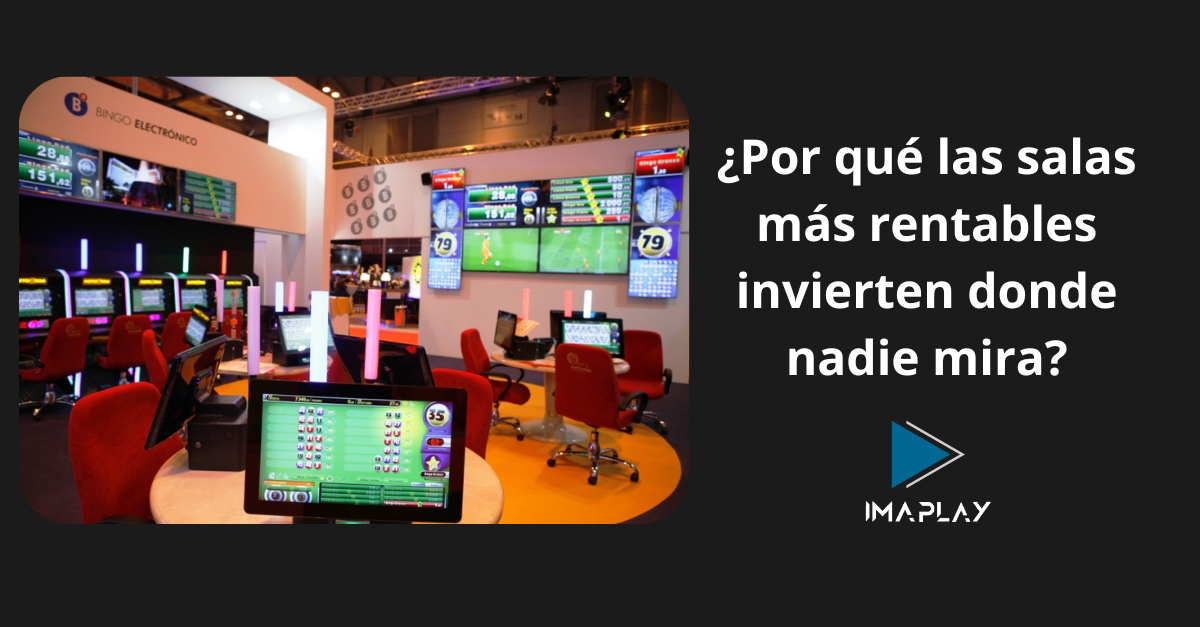
When you walk into a bingo hall today, your eyes are automatically drawn to the most obvious elements. Let me take you on a different tour, one that shows you where the success or failure of your operation is really decided.
THE RECEPTION: MORE ALL OF THE ELEGANT COUNTER
What everyone sees: Digital screens displaying awards and a smiling receptionist.
What makes the difference: A system that already knows who you are before you arrive, has calculated your probability of play based on your historical patterns, and has optimized staffing for that specific session.
I'm not talking about science fiction. I'm talking about rooms that process this information in microseconds and adjust their operation accordingly.
PAUSA: If you are one of those who think “this doesn't apply to my room because we are different”, I have bad news for you. They told me the same thing in Valencia two years ago. Today that room processes 40% more items with the same staff.
THE TERMINALS: WHERE THE MAJORITY IS WRONG
What everyone wants: State-of-the-art touch screens with spectacular graphics.
The inconvenient reality: You can have the most expensive display on the market, but if your system doesn't process transactions in real time, you've spent money in the wrong place.
I've seen rooms with €3,000 terminals lose customers because they take 30 seconds to process a prize payment. Contrast this with operations that use more modest equipment, but with integrated systems that process everything instantly.
Which one do you think generates more income?
AUDIO AND LIGHTING: APPLIED PSYCHOLOGY
Conventional: Systems that make noise and look pretty when someone wins.
The smart thing: Algorithms that analyze the audience's attention patterns and adjust intensity, color and timing to maximize emotion at the right moments.
Real data: a room in Valencia increased its average dwell time by 23% simply by optimizing these elements with artificial intelligence.
CONNECTIVITY: THE FACTOR THAT NO ONE CALCULATES
The amateur approach: "We have WiFi for customers."
The pro approach: Redundant infrastructure with automatic failover, edge computing for local processing, and latency measured in milliseconds, not seconds.
Why does it matter? Because when your system crashes during a game with €5,000 in prizes, it's not just a "technical nuisance." It is lost credibility that takes months to recover.
CUSTOMER MANAGEMENT: DATA THAT GENERATE EUROS
The basics: A database with names and phone numbers.
What is profitable: Predictive systems that identify when a regular customer is about to leave the room, what type of promotion each segment needs, and what is the optimal time for each communication.
The numbers don't lie: rooms with intelligent CRM have retention rates 40% higher than the industry average.
SECURITY: BEYOND THE CAMERAS
The obvious: HD cameras in every corner.
What is needed: Systems that detect anomalous patterns before they become problems, facial recognition for problem gamblers, and automatic alerts that prevent conflictive situations.
It's not paranoia. It is mathematics applied to risk prevention.
NOW WE REACH THE POINT THAT SEPARATES THE PROFESSIONALS FROM THE AMATEURS
CASH CONTROL: WHERE EVERYTHING IS DECIDED
This is where most fail miserably, and where successful operations build their competitive advantage.
I ask you something direct: do you know exactly how much money you have in your living room right now? I don't mean "approximately" or "should be." I mean exact figures, updated to the second.
If you hesitated, even for a moment, you already have your answer as to why your competitors are gaining ground on you.
The numbers your accountant doesn't tell you:
An average room with 50 machines manages between €15,000 and €25,000 daily. The sector accepts discrepancies of 2-4% as "normal." Let's do the math: that's between €300 and €1,000 a day that are simply "lost."
Multiply that by 365 days. Are we still talking about “normal operating costs”?
€137,000 per year that disappears in an average room. Does that seem little to you? It is the salary of three employees.

The true cost of inefficiency:
- 15-20 minutes lost between games = less games per night = less income
- Stressed staff during peak hours = poor service = non-returning customers
- Manual processes = human errors = avoidable losses
- Lack of traceability = security vulnerabilities = sleepless nights
THE ELEMENT THAT REALLY MAKES A MODERN ROOM
It's not what your clients see. It's what connects everything you don't see.
The most profitable rooms I know in Spain, Italy, Mexico and Argentina have something in common: they have intelligently automated cash control until it becomes their invisible competitive advantage.
When you visit these operations, you immediately notice something different:
- Employees move with confidence, not haste
- Transactions flow without visible interruptions
- The atmosphere feels relaxed, even during rush hours
- Customers seem more satisfied, even if they don't know exactly why
The answer lies in the central nervous system that connects each transaction.
IMAPLAY: 15 YEARS SOLVING WHAT OTHERS CONSIDER “IMPOSSIBLE”
Let me be straight with you: we didn't develop ImaPlay because we had time to spare. We developed it because after years of watching venues lose money on processes that should be automatable, we decided someone had to solve this problem correctly.
What makes ImaPlay different?
I'm not going to bombard you with technical features. I'm going to give you measurable results:
- Elimination of 99.9% of cashier errors. It's not marketing. These are data from real implementations.
- 60% reduction in times between games. More games = more income. Simple math.
- Integration with more than 40 machine models. Because technology must adapt to your operation, not the other way around.
- Real-time visibility of each euro. Because "approximately" is not a business strategy.
The optimized human factor:
Our NFC authentication systems allow your staff to move around the room processing transactions from any point. No queues, no waiting, no errors.
The result? Less stressed staff who can focus on what really matters: making your customers want to return.
THE DATA THAT SUPPORTS THE TRANSFORMATION
Europe: €73.35 billion in 2024, sustained growth of 4.3% annually. The market rewards operational efficiency.
Latin America: Explosion from $23.55 billion to $51.65 billion projected for 2033. Mexico leads with growth of 96.66%, followed by Argentina (63.58%) and Peru (55.66%).
These are not random numbers. They are markets that are rewarding operations that understand that real modernity lies in invisible optimization.
THE QUESTION THAT DEFINES YOUR FUTURE
Does your room have electronic cards or does it have an integrated ecosystem?
The difference will determine whether you are part of the growth of the sector or if you watch others capture the opportunities that you missed.
It's not a budget issue. It's a question of priorities.
You can continue investing in flashy elements that impress for five minutes, or you can build the invisible infrastructure that generates returns for years.
The decision is yours. The results too.