
The box of the future: without queues or errors
Today we start a weekly series where we will explore the innovations that are redefining the point of sale experience. We will talk about the technologies that are already underway, but we will also dare to imagine how they could evolve in the not too distant future.
Can you imagine walking into a store, grabbing what you need and leaving without having to wait in line, scan codes or even take out your wallet? That scenario, which until recently seemed like science fiction, is now a reality in some places. And what's coming promises to be even more disruptive.
🛒 Invisible payments: goodbye to traditional cash registers
Come in, buy and leave. It's that simple. Invisible payments completely eliminate cash as we know it.
This model is already operational in stores like Amazon Go, where cameras, sensors and AI automatically identify the products you pick up. When you walk through the door, the system charges the purchase to your Amazon account without you having to do anything.
In Spain, ZARA SA is taking its first steps in this direction. Thanks to RFID technology, the garments have built-in smart payment labels that allow to be made in seconds, with a simple mass scan in the self-payment area.
This reduces checkout time to less than 15 seconds.
And in the future? Imagine supermarkets, pharmacies, convenience stores, imagine Ikeas where you don't even need a scan. All you have to do is enter with your linked app, take what you need and leave. The sensors will recognize the products you are carrying, automatically charge your account and send you the digital invoice. All in less than a blink.
📌 Source: Huffington Post
Biometric payment: your face is your wallet
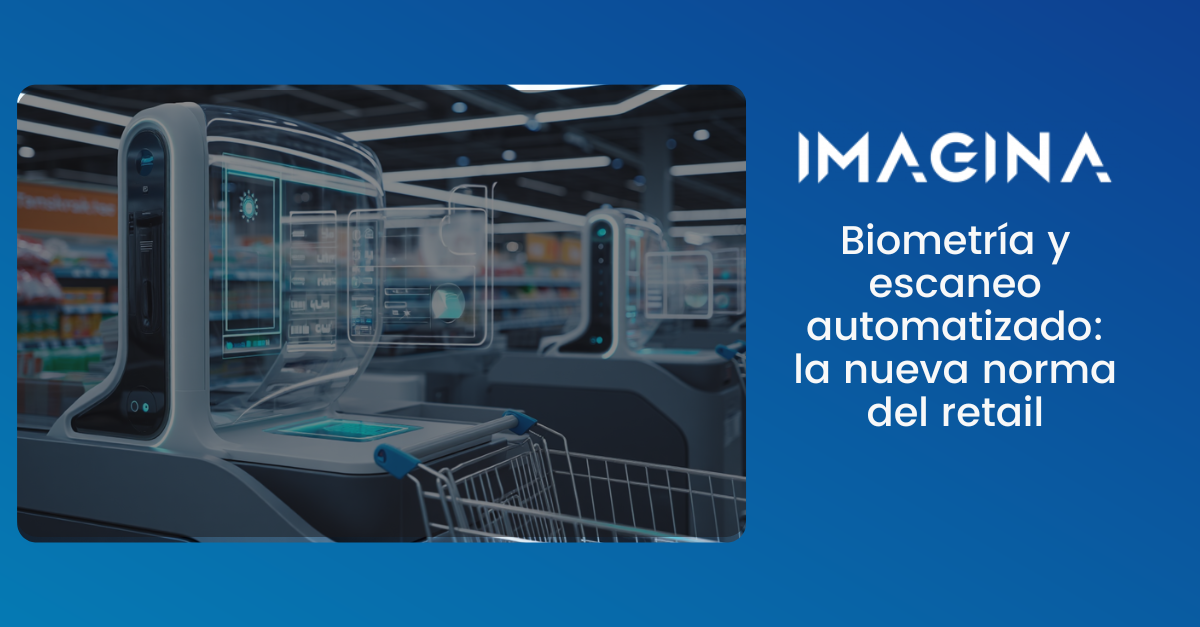
Biometric payment is gaining ground as a fast and secure alternative to cards and cash. In countries like China, Alipay already allows you to pay with facial recognition in thousands of establishments. You only need to look at a screen to validate the purchase.
At Amazon, Amazon One technology uses palm scanning as a means of authentication to pay. This system, already present in Whole Foods supermarkets, promises faster, personalized and contactless transactions.
And in the future? What is an alternative today could be the norm tomorrow. Envision a world where cards are obsolete and biometric identification is the standard in every business. With a simple wink or the palm of your hand, you could authorize a payment, access personalized discounts or even validate age on restricted purchases.
🤖 AI and predictive analysis: the box that knows you better than you
Artificial intelligence is already transforming points of sale, but there is still much to see. Today, large retailers like Walmart use AI to predict demand and optimize inventory in real time. This reduces stockouts and ensures that products are always available.
Additionally, AI is used to analyze purchasing patterns and personalize the experience. For example, Sephora already applies AI to its self-checkouts to suggest complementary products or recommend relevant promotions right before checkout.
And in the future? AI, apart from automating checkouts, will turn them into intelligent assistants. Imagine a system that, by identifying your usual purchases, suggests personalized offers or alerts you if you forgot something you usually carry. It could even detect spending patterns and recommend ways to save.
📌 Source: Appscrip
And the challenges?
The future of checkouts promises immediacy and efficiency, but it also poses challenges.
- Data privacy: With biometrics and invisible payments, protecting personal information will be key to maintaining customer trust.
- Technological security: with automation, vulnerability to cyber attacks will be a major challenge. Protecting payment platforms with encryption and proactive fraud detection will be essential.
✨ The box of the future is closer than we think. No lines, no friction, with an agile and personalized experience. And this is just the beginning.
In the next installments of this series, we will continue exploring innovations that are transforming retail.