
Recommendations for the Retail Sector
Technology in the retail sector has rapidly changed the way businesses operate, facilitating, for example, inventory management and online sales. However, these advances sometimes work against us, since there will always be those who try to violate the systems, bringing multiple problems such as the increase in cyberattacks.
The reality is that, for many businesses, especially in the retail sector, cyberattacks are not a question of “ if will happen”, but rather “ when ”. According to an IBM report, by 2024 the global cost of cyberattacks is expected to exceed $10.5 trillion, with approximately 24% of these attacks targeting the retail sector. This alarming increase highlights the urgent need to prepare for and protect against potential attacks ( IBM – United States ).
The Risks of a Cyberattack in the Retail Sector
The retail sector is an attractive target for cybercriminals due to the volume of sensitive data handled by, such as credit card information, customer personal data, and transaction records. A cyber attack can have devastating consequences, including:
Main cyber threats in the retail sector
Pay attention to this part, we are going to describe the main risks that your retail company has to keep in mind when it comes to cybersecurity. We also leave you examples of how these events have occurred in our recent history, so that you can take them as an example and put your security plan into action now:
Ransomware
Ransomware is a type of malware that encrypts a company's data, blocking access to it until a ransom is paid. This attack can completely paralyze a company's operations, especially during critical times like the holidays, when business activity is at its highest. The effects of ransomware can be devastating, preventing businesses from processing sales, accessing inventory, and operating normally.
In 2021, supermarket chain Coop in Sweden had to temporarily close hundreds of its stores due to a ransomware attack that affected its software provider. The attack disrupted the chain's operations for several days, resulting in significant losses and a massive service disruption.
Phishing
Impact: Phishing is a tactic used by cybercriminals to trick a company's employees and customers into revealing sensitive information such as passwords and financial data. Phishing attacks typically increase during busy shopping periods, such as the holiday season, when consumers conduct more online transactions. These attacks can compromise personal and financial data of both customers and employees.
In 2015, a Lithuanian scammer tricked Google and Facebook employees into sending him more than $100 million via phishing emails that appeared to come from a legitimate provider. In this case, not only economic losses are reported, it is well known that reputational loss is even more difficult to repair.
DDoS attacks
Distributed Denial of Service (DDoS) attacks seek to overload a system's resources, making it inaccessible to legitimate users. These attacks are especially damaging to online stores during promotions and events like Black Friday, when web traffic is already high. DDoS attacks can completely disrupt online services, directly affecting sales and customer experience.
During Black Friday 2021, several high-profile online stores, including Zara and Walmart, suffered DDoS attacks that disrupted their online services, causing significant losses and frustration among the customers
Preventive Measures: How to Protect your Business
Prevention is the best defense against cyber attacks. Here we offer you some recommendations to strengthen your company's cybersecurity:
Continuing Training for Staff
- Importance: Human error remains one of the leading causes of security breaches. Training your team on cybersecurity best practices is essential.
- What to do: Implement phishing drills so employees learn to identify suspicious emails and stay alert.
Multi-Factor Authentication (MFA) Implementation
- Importance: Multi-factor authentication adds an additional layer of security, making unauthorized access more difficult.
- Actions: Require employees to use a second form of identification, such as an authentication app on their smartphones, in addition to their regular password for devices that handle sensitive company information.
Constant System Monitoring
- Importance: Continuous monitoring allows unusual activities to be detected before they become a major problem. Seriously consider purchasing prevention tools, it is an investment that ensures your peace of mind.
- Example: Uses behavioral analysis tools to identify suspicious patterns that may indicate an imminent attack. Some examples are Datadog, Splunk or New Relic, which offer infrastructure, application and log monitoring with real-time analysis
Regular Software Update
- Significance: Software patches and updates address vulnerabilities that could be exploited by attackers.
- Activities: Establish a schedule to review and apply security updates to all point-of-sale systems and servers.
What to do in case of a cyber attack?
Despite all preventive measures, no system is infallible. It is vital that your company is prepared to act quickly if an attack occurs. Here we indicate the key steps to follow in a very superficial way:
Activate the Incident Response Plan
- Action: An incident response plan must be predefined and rehearsed in advance. This plan should include specific steps to contain the attack and mitigate the damage.
- Example: If you detect a security breach, immediately isolate affected systems to prevent the attack from spreading.
Inform Affected Parties
- Action: Transparency is essential. Notify customers and appropriate authorities of the incident as soon as possible.
- Example: If customer data is compromised, quickly report the scope of the attack and the measures you are taking to protect their information.
Collaborate with Cybersecurity Experts
- Action: Contact cybersecurity specialists to help contain the attack and recover data.
- Example: Hire a specialized company to analyze the nature of the attack and reinforce the security of your infrastructure.
Evaluate and Learn from the Incident
- Action: After containing the attack, perform a full assessment to understand how it occurred and what measures you can implement to prevent future incidents.
- Example: Review security logs, identify vulnerabilities that were exploited, and adjust your security policies accordingly.
Protecting your Business with Imagina IT Solutions and ImaCash
This is the panorama: increasingly sophisticated and frequent cyber threats. We cannot deny it, but we can help you prevent it.
ImaCash not only optimizes cash management, but also incorporates robust security measures designed to protect your business against major cyber threats:
- Ransomware Protection: ImaCash uses advanced backup and recovery systems, ensuring that your critical data is always protected and accessible, even in the event of a ransomware attack.
- DDoS Attack Mitigation: The architecture of ImaCash is designed to resist and mitigate DDoS attacks, ensuring that your sales and cash management operations remain uninterrupted, even during periods of high traffic.
- Continuous Updates: We keep ImaCash constantly updated with the latest security measures, adapting quickly to new emerging threats in the cybersecurity landscape.
- Specialized Technical Support: Our team of security experts is always available to advise you and respond quickly to any security incident.
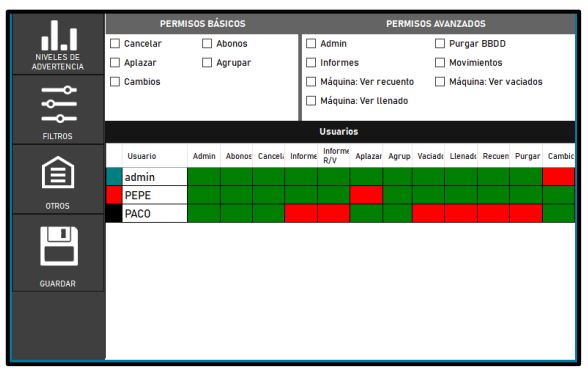
By choosing Imagina IT Solutions and ImaCash, you are not only optimizing your cash management, but you are also investing in the security and continuity of your business.
Protect your business today with ImaCash and focus on what really matters: grow your company with peace of mind and confidence in your digital security.